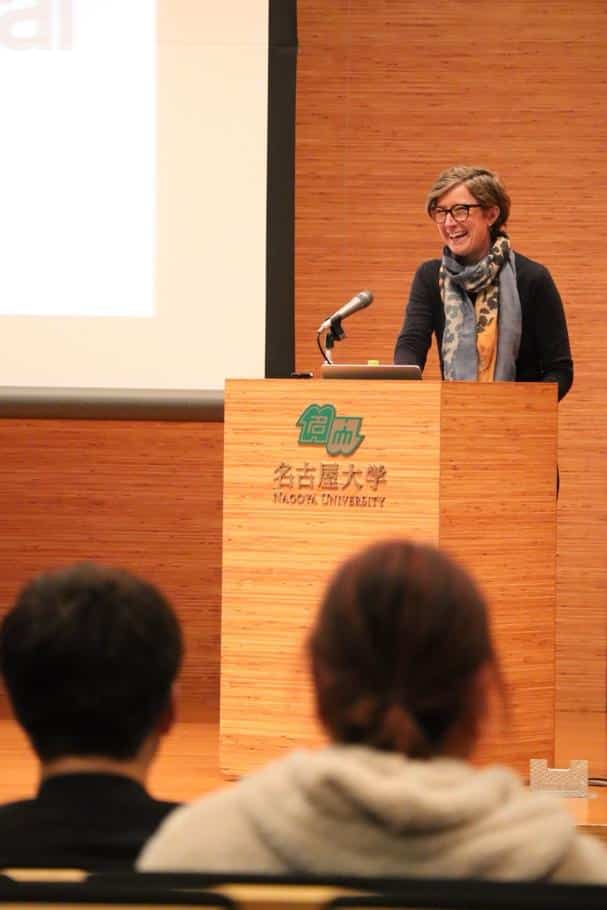
By Dr Ruth Armstrong, Senior Research Associate at University of Liverpool and Consultant to Prison Radio International.
Two years ago, I travelled to Japan to give a lecture at Nagoya University on prison radio international, documented in this blog. That visit led to many rich conversations, but one connection in particular stayed with me: a Japanese historian and radio broadcasting scholar, Nanako Ota, whose work explores the role of radio in democracy-building, particularly the voice of women and the importance, and fragility, of authenticity.
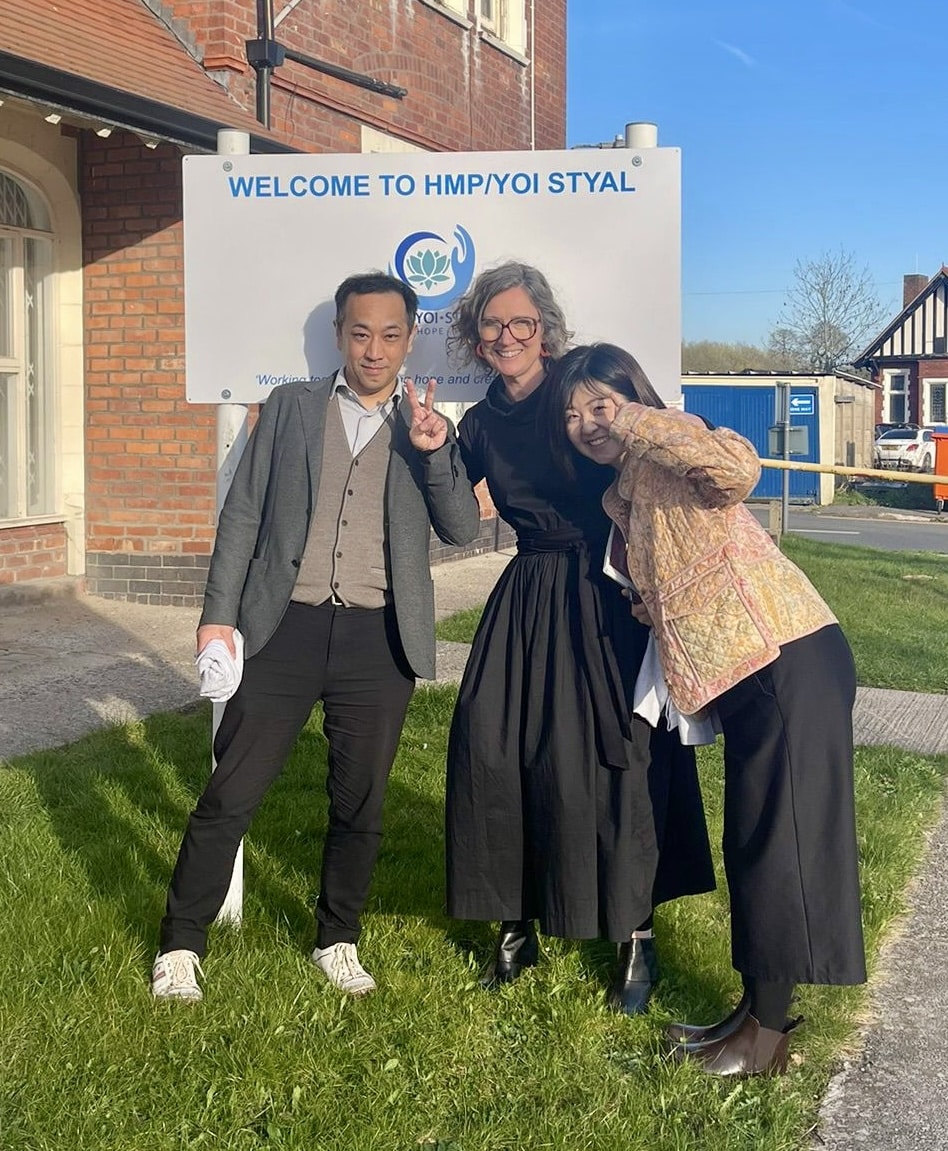
Last month, that connection came full circle when Nanako spent a few days of her research leave in Europe as a visiting scholar at the University of Liverpool’s School of Law and Social Justice.
Nanako said, “Ruth’s lecture in Nagoya was so powerful and inspiring that I decided to fly to the UK to see the Prison Radio Association with my own eyes.”
At the same time, we were also delighted to host another visiting scholar from Japan, Akinari Hayashi, a prison officer from Japan working in rehabilitation within the Ministry of Justice. Alongside his professional role, Akinari is undertaking a PhD to better understand how people move away from crime and rebuild their lives, and especially the important role of people with lived experience of the criminal justice system. His work that resonates strongly with our own research culture in Liverpool, particularly through his connection with Professor Shadd Maruna.
It felt like a rare and valuable convergence: two scholars from Japan, each exploring in different ways how voice, identity and change operate within and around systems of justice.
We wanted to make that convergence count, and thanks to the generosity of Abbey Darling, Director of Operations and Women’s Projects at the Prison Radio Association, we were able to arrange a visit to the radio studios at HMP Styal, a prison for women and girls in Manchester. There, Nanako and Akinari met the team behind National Prison Radio, both the media professionals who support the project and the women currently serving prison sentences who work together to create some of the 24/7 radio content available to people in prison.
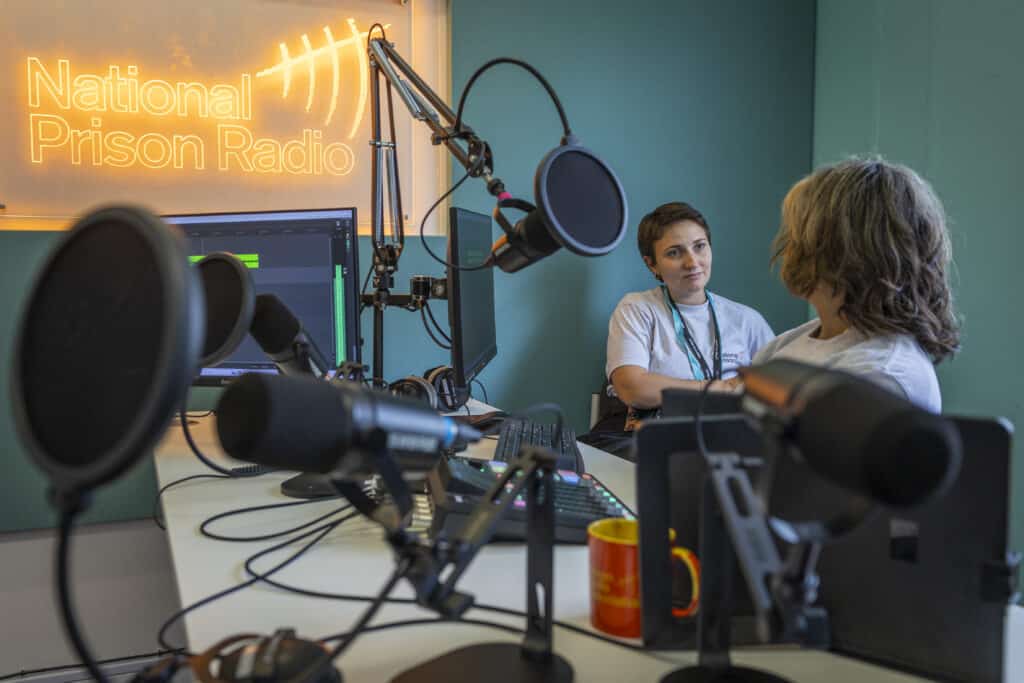
To say we received a warm welcome would be an understatement. What struck us immediately was the depth of professionalism in the room. This was not a token activity or a superficial engagement. The women spoke with clarity and pride about their work: about learning to produce, present and edit; about developing confidence; about understanding audiences; about holding themselves, and each other, to high standards.
But what also became clear was that this work is built on trust, and that trust is hard-earned. We heard how women must demonstrate consistency, commitment and responsibility within the prison before being given the opportunity to work in the radio studio. The role on the radio carries weight: the responsibility of speaking to a national audience across prisons in England and Wales, and the privilege of shaping content that informs, connects and uplifts others.
For Akinari, the experience was both striking and thought-provoking. Reflecting on the visit, he said:
“I am still in awe that a radio station exists within a prison. In Japan, prison life is traditionally viewed as a place of punishment, where people in prison are expected to remain quiet and submissive. However, the landscape of Japanese corrections is beginning to shift. There is a growing recognition that we must focus more on rehabilitation and, crucially, listen to the voices of the prisoners themselves.”
Nanako’s research has some important insights into why it could be vitally important to listen to the voices of those in our prisons. Her work on the role of radio as a tool for building forwards after the American occupation of Japan asks important questions about authenticity, about when voice is truly one’s own, and when it risks being shaped, filtered or co-opted by more powerful systems. Sitting in the studio at Styal, listening to the women share their experiences and play clips from their programmes, understanding how they work with journalistic independence but to an editorial code that permits transparent expectations and trust to flow between prison authorities and the Prison Radio Association, those questions felt both present and professionally answered.
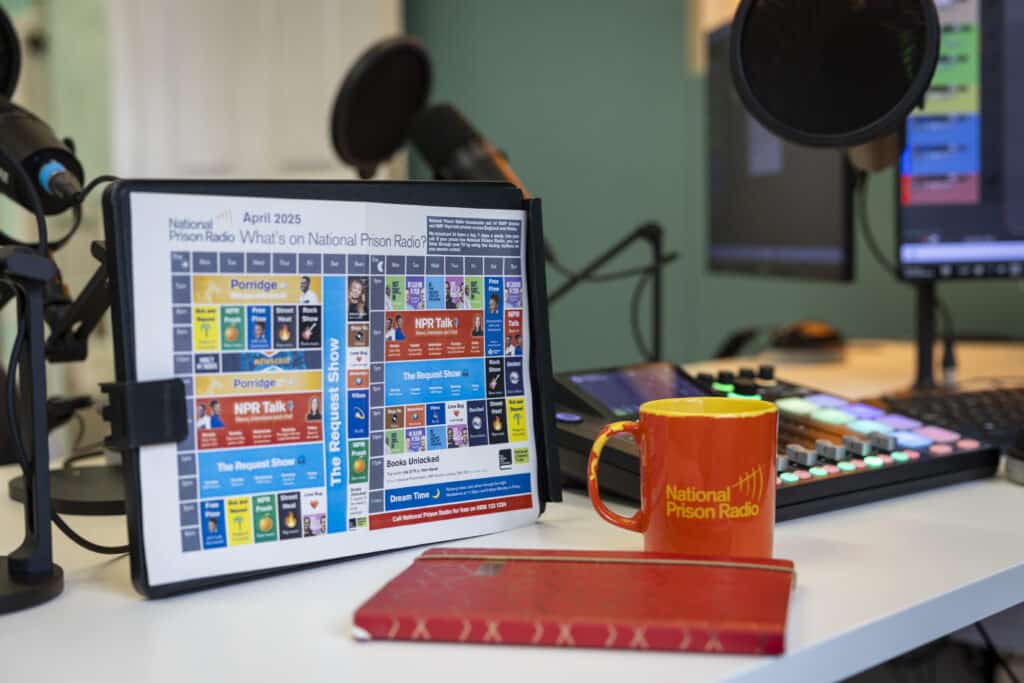
Here were voices that felt unmistakably authentic. We heard one woman describe her journey from her first ever attempt at presenting, (which sounded good to us but she described how she was nervous, uncertain) to the programme she had produced that very morning, less than a year later, which was unmistakably more confident and compelling. We heard about the discipline of the craft, the importance of teamwork, and the pride that comes from producing something of genuine quality.
Again and again, the same theme emerged: the power of combining professional skill development with authentic self-expression. Prison Radio is not just about giving people a voice, they already have that! It is about supporting them to develop the confidence, capability and belief to use it well, and that’s a skill that is important to success in life wherever you find yourself.
Visiting a prison carries a weight that is difficult to shake. Walking back out through the gates, leaving behind people who still have years to serve, is always sobering. That reality does not disappear. But what stayed with us after Styal was something more complex and, in many ways, more hopeful. Alongside the complex emotions always present after time in prison, there was a kind of compelling joy. A sense that even within one of the most restrictive environments imaginable, people can find ways to express themselves, to connect with others, and to begin building new narratives about who they are and who they might yet become.
For Nanako and Akinari, the visit offered not just insight, but possibility.
What might it look like to support women in Japan who have experienced imprisonment to find and use their own voices? How might radio, or audio more broadly, play a role in shaping not only individual journeys, but also public understandings of crime, punishment and rehabilitation? And how can we ensure that these voices remain authentic, rather than being absorbed into systems that risk reshaping them for other ends?
These are not easy questions. But they are important ones.
As our conversations continue, I find myself wondering whether this is just the second chapter in a longer story. Perhaps there will be a third instalment to what is now becoming a blog series – one that follows Nanako and Akinari as they take these ideas forward in Japan, working alongside women to narrate new possibilities for their lives, and for the communities they are returning to.
For now, though, what remains is a shared experience across continents: that voice matters, that trust matters, and that even in the most challenging of places, both can take root and grow.

Watch this space – or perhaps listen up for the next instalment!
The Prison Radio Association is leading the development of Prison Radio International (PRI), a growing global movement of people using audio in criminal justice settings for social good. Support this work by donating here.